Norfolk Island’s Wartime Legacy
Travelling to Norfolk Island these days is as simple as jumping on a two-hour flight, but the reason we can do that has its roots in a very different time.
During World War II, the island’s location between Australia, New Zealand and the Solomon Islands gave it enormous strategic importance, transforming it from a quiet settlement into a vital Allied outpost.
To support the war effort, an airstrip was built, enabling Norfolk Island to serve as a refuelling and supply stop for military aircraft and securing its place in the South Pacific campaign. Traces of wartime history are scattered across Norfolk Island, from the remnants of the old airstrip to former communication outposts.
You can discover what life was like for those stationed on the island during World War II at the Kingston UNESCO World Heritage Site, home to radar stations, bunkers and other wartime relics.
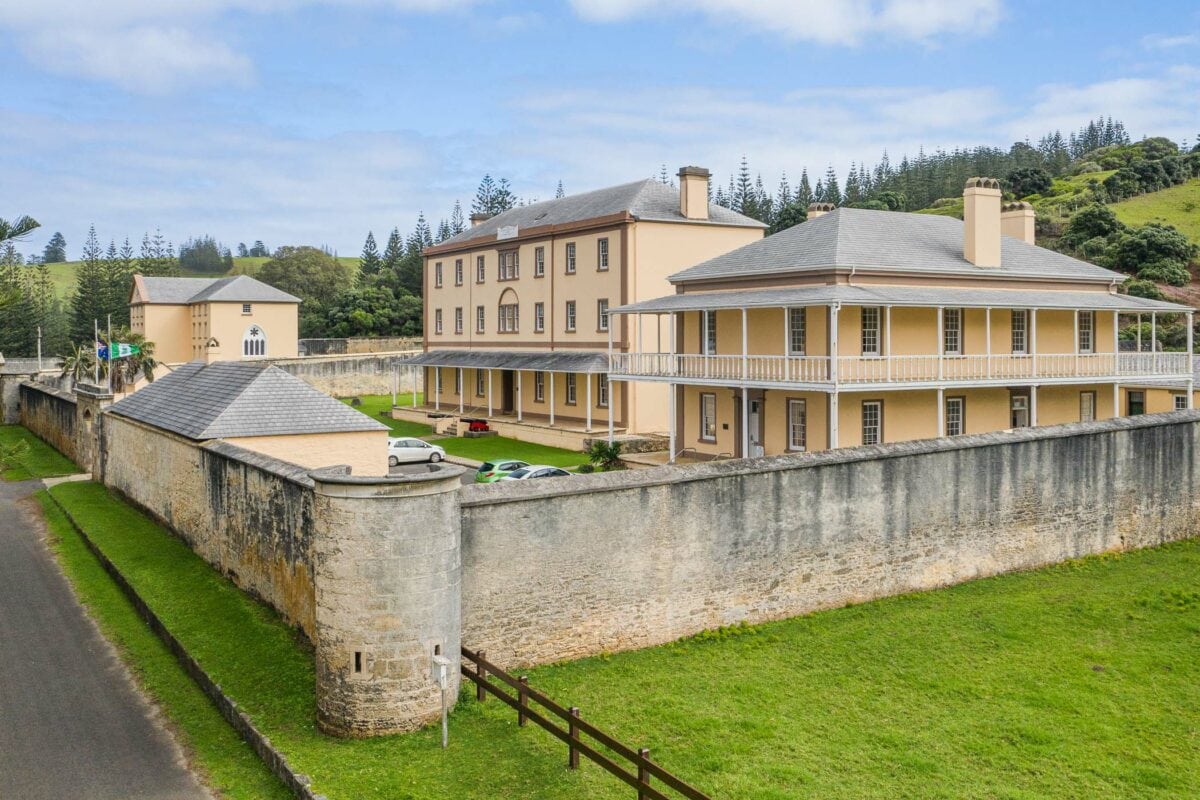
Old Military Barracks
Step inside the Old Military Barracks – built between 1829 and 1834 – to explore the soldiers’ quarters, officers’ lodgings, a military hospital and surrounding outbuildings. With its stone walls and corner turrets, the barracks is one of the finest examples of Georgian architecture on Norfolk Island. Between 1979 and 2015, it was home to the Norfolk Island Legislative Assembly and today the ground floor houses the Norfolk Island courthouse.
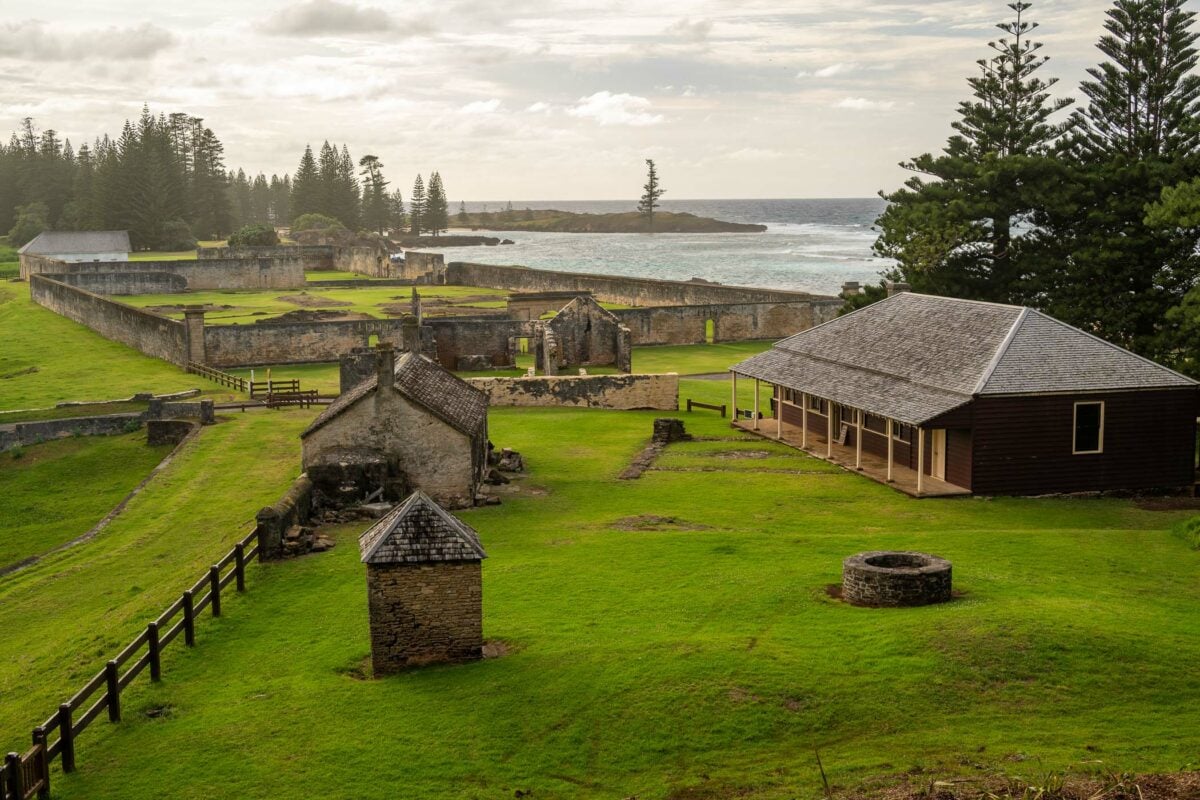
The Surgeon's Quarters
Framework was shipped from Sydney to construct this building in 1827 and clad with weatherboards and shingles crafted from local timbers. Originally serving as a hospital and medical facility during the island’s second penal settlement, a United States Coast Guard unit was stationed here during World War II. Now, the building is home to the Norfolk Island Lions Club and functions as a museum displaying historical photographs.
Bounty Folk Museum
The Bounty Museum, housed in a 180-year-old building originally used as a military store, is both a museum and Anglican church. Known as the people’s museum, it offers a fascinating journey through Norfolk Island’s history, from 1788 to the present. Visitors can explore a wide array of artefacts, including Bounty memorabilia, antique medical instruments and handwritten research books, all curated to reveal island life across the centuries. Highlights include a detailed replica of the HMAV Bounty Launch from the Maritime Museum UK. The museum combines historical insight with everyday stories, making it a must-visit on Norfolk Island.
Government House
Built in 1829, Norfolk Island’s Government House served as the home for commandants during the penal era and later for the island's administrators, becoming the oldest Government House in Australia. Today, the Georgian mansion is the official residence of the Administrator of Norfolk Island. Government House is accessible to the public only on select open days, during which you can tour the formal reception rooms which are steeped in history with many antique furnishings and period features.
Norfolk Island’s wartime past is woven into its landscape, from old barracks and bunkers to radar stations. Visiting these sites offers a fascinating glimpse into the island’s role in World War II, adding a rich historical layer to your travel experience.